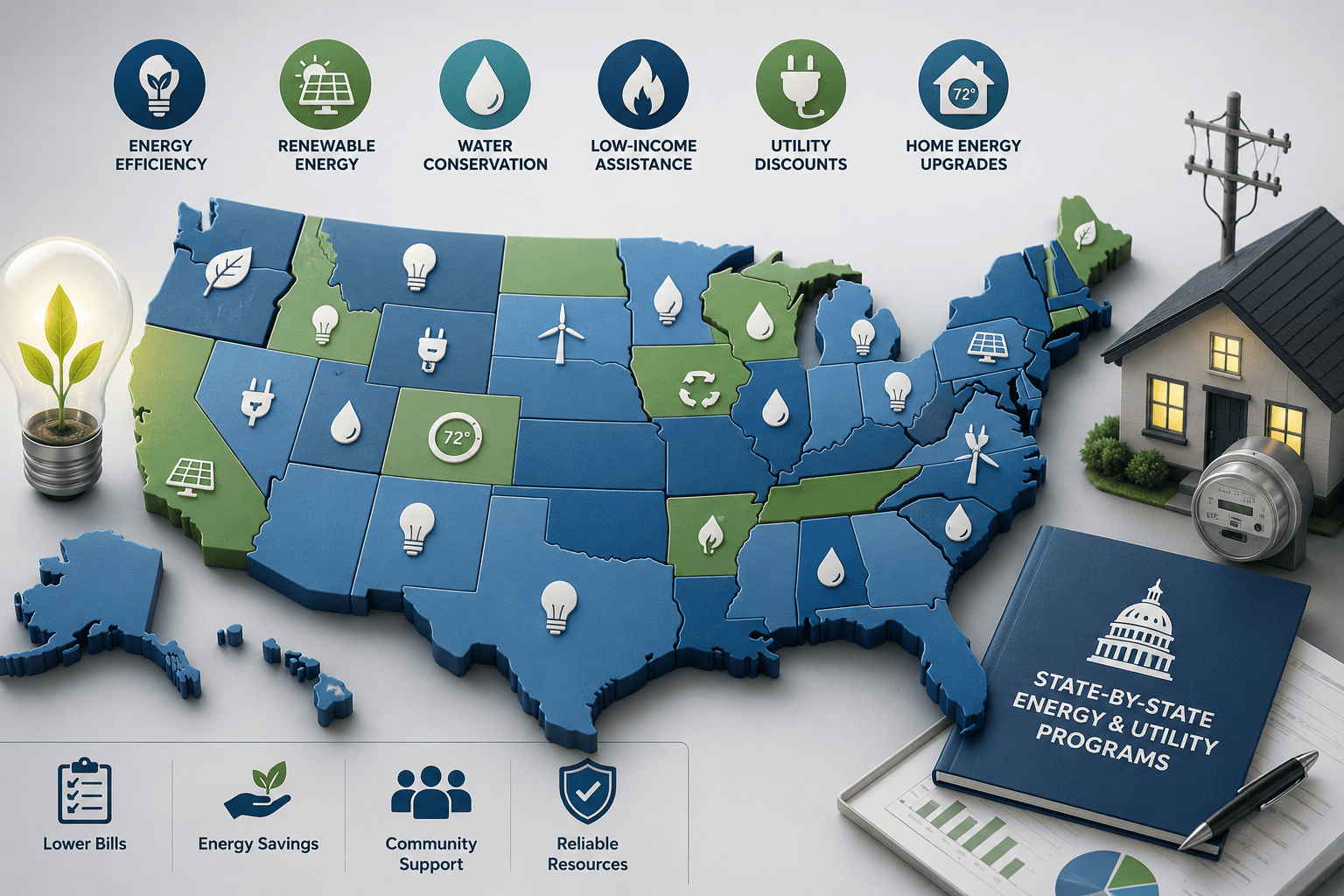
Energy and utility programs are some of the most valuable Support Systems a household can use — but they are also the most location-specific. This VIP walkthrough explains how the major programs are structured, why they differ so much by state, and how to find the exact office that serves your area. It is refreshed each quarter as state rules change.
The National Backbone: LIHEAP
The Low Income Home Energy Assistance Program (LIHEAP) is the federal foundation most state energy programs build on. It helps eligible households with heating and cooling costs, and sometimes with weatherization or emergency assistance. Federal dollars flow to each state, which then sets its own income limits, benefit amounts, and application windows.
Why States Look So Different
Because states administer the funds, three things vary widely:
- Timing. Some states open applications seasonally; others run year-round until funds run out.
- Benefit size. Colder-climate states often weight benefits toward heating; warmer states toward cooling.
- Extra programs. Many states layer their own utility-bill credits, arrearage forgiveness, or weatherization grants on top.
Watch the application window
The single most common reason households miss energy assistance is timing. Funds are limited and often distributed first-come, first-served. Mark your state's opening date and prepare documents in advance so you can apply early.
A Repeatable Way to Find Your State's Program
- Search your state name plus "LIHEAP" or "energy assistance."
- Confirm the administering agency — usually a human services or community-action office.
- Check the income limit for your household size and the current application window.
- Look for add-on programs from your utility company or state weatherization office.
Quarterly Updates
Energy program rules, funding levels, and application dates change frequently. As a VIP walkthrough, this guide is reviewed each quarter so the steps and timing reflect the current cycle. Pair it with the free Household Cost Gap Analyzer to see how much of your gap energy programs could address.
The Main Types of Energy Help
Once you know that LIHEAP is the federal backbone, it helps to see the different shapes energy assistance can take. Most households think only of a one-time bill payment, but the support landscape is broader than that. Understanding the categories lets you stack help rather than relying on a single program.
- Heating and cooling assistance. The most familiar form — help paying a seasonal energy bill, weighted toward whichever extreme your climate faces.
- Crisis or emergency assistance. Faster help when a household faces a shutoff or has already lost service, often handled outside the normal application window.
- Weatherization. Rather than paying a bill, these programs reduce future bills by improving insulation, sealing drafts, and making a home more efficient.
- Utility-run programs. Many utility companies offer their own bill credits, level-payment plans, and discounts for qualifying customers, separate from state programs.
- Arrearage forgiveness. Some states and utilities will forgive part of a past-due balance when a household stays current going forward.
Documents to Have Ready
Because energy assistance is often first-come, first-served, the households that succeed are usually the ones who applied quickly once the window opened — and that speed comes from having paperwork prepared in advance. While each state asks for slightly different things, a common core shows up almost everywhere. Assemble these before your state’s opening date so you are ready on day one.
- A recent energy or utility bill showing your account number and provider.
- Proof of where you live, such as a lease, mortgage statement, or official mail.
- Proof of income for everyone in the household, which may include pay records or benefit statements.
- Identification for the applicant and a count of everyone living in the home.
- If you are facing a shutoff, any notice from your utility, since that can move you into crisis processing.
Apply early, then layer
The strongest approach is rarely a single program. Apply to your state’s main energy assistance as soon as it opens, then ask your utility about its own discount or level-payment options, and look into weatherization to lower next season’s bills. Each layer addresses a different part of the problem, and together they do far more than any one alone.
How Climate Shapes What You’ll Find
One reason this guide cannot simply list a single set of rules is that geography changes the entire emphasis of a program. In colder regions, the machinery is built around winter heating — application windows open ahead of the cold season, and benefits lean toward keeping homes warm. Shutoff protections in these areas are frequently tied to winter months, recognizing that losing heat can be dangerous.
In hotter regions, the same logic applies to cooling. Summer becomes the critical season, benefits tilt toward keeping homes safely cool, and protections often focus on the hottest stretches of the year. If you move between regions, do not assume the program you knew before works the same way in your new home — the season to watch and the documents to prepare may be entirely different.
A Repeatable Routine for Any State
Because the specifics shift by location and by year, the most durable skill is not memorizing one program but having a reliable routine you can run wherever you live. Each quarter, or whenever your circumstances change, walk through the same steps.
- Confirm which office administers energy assistance in your area and how to reach it.
- Check the current income limit for your household size, since limits are updated periodically.
- Note the exact opening date of the application window and set a reminder ahead of it.
- Contact your utility directly to ask about discounts, level-payment plans, and forgiveness options.
- Look into weatherization to reduce future bills, not just the current one.
- Keep your document folder current so you can apply the moment the window opens.
When You’re Facing a Shutoff
Emergencies follow a different path than routine applications. If you have received a disconnection notice or already lost service, you usually should not wait for the standard window — crisis assistance exists precisely for these moments and often moves faster. Contact both the administering office and your utility right away, explain the situation plainly, and ask what emergency options exist. Many utilities will also pause a shutoff while an assistance application is pending, but they generally need to hear from you to do so. Reaching out early, before service is lost, almost always leaves you with more options than waiting.
Putting the Walkthrough to Work
Energy assistance rewards preparation more than anything else. The programs are real and substantial, but they are time-bound, location-specific, and often limited by available funds — which means the households that benefit most are simply the ones who knew where to look, had their documents ready, and applied early. Treat this as a recurring habit rather than a one-time task: confirm your office, watch your window, prepare your folder, and layer state help, utility programs, and weatherization together. Because the rules shift each cycle, revisit these steps every quarter, and lean on the free Household Cost Gap Analyzer to see how much of your overall cost gap energy programs can realistically close.
Understanding Your Energy Bill Before You Apply
One quietly powerful step happens before any application: learning to read your own energy bill. Most bills separate the cost of the energy itself from delivery charges, fees, and seasonal adjustments. Knowing which parts of your bill are driving the total helps you target the right kind of help. If delivery and fixed charges dominate, a discount or level-payment plan from your utility may matter most; if usage is the main driver, weatherization that lowers consumption could do more over time.
Reading the bill also helps you spot the early warning signs of trouble — a balance creeping upward, a seasonal spike, or a past-due notice — while there is still time to act calmly. Households that watch their bills tend to reach out for help before a crisis, when more options are available, rather than after service is already at risk. That habit alone can change the outcome.
Making Your Home Use Less to Begin With
Assistance that helps pay a bill is valuable, but help that shrinks the bill itself keeps working season after season. Weatherization programs exist for exactly this reason, and they are often underused simply because households think first of bill payment. Beyond formal programs, small changes in how a home is sealed and used can meaningfully lower what you owe. Consider where energy quietly escapes or is wasted.
- Drafts and leaks. Gaps around doors and windows let conditioned air escape, making heating and cooling work harder than they should.
- Insulation. Homes with thin or aging insulation lose comfort — and money — through the roof and walls.
- Aging equipment. Older heating and cooling systems often run far less efficiently than newer ones, and some programs help with upgrades.
- Everyday habits. Thermostat settings, water heating, and lighting choices add up over a full year, even though each seems small.
Pairing a one-time bill assistance application with longer-term efficiency improvements is the combination that produces lasting relief. The first handles the immediate season; the second lowers every season that follows.
Ask your utility directly
Utility companies are often the most overlooked source of help, partly because households assume the company only collects payments. In reality, many utilities offer their own discounts, payment plans, balanced-billing options, and hardship programs — but they rarely advertise them loudly. A single phone call to ask what programs you might qualify for can uncover help that no government office administers.
Protecting Yourself From Scams
Wherever assistance money flows, bad actors sometimes follow. Energy assistance is occasionally targeted by scams that prey on households worried about a shutoff. Knowing the warning signs keeps your information and your money safe while you pursue legitimate help.
- Be cautious of anyone who contacts you unexpectedly and pressures you to pay immediately to avoid disconnection.
- Legitimate assistance does not require you to pay a fee up front to receive help.
- Confirm the office or program through information you looked up yourself, not a number or link provided by an unsolicited caller or message.
- Never share sensitive personal details with someone who reached out to you and whose identity you have not independently verified.
When in doubt, slow down. Real assistance programs work on published timelines and through identifiable offices; they do not demand secrecy or instant payment. Taking a moment to verify protects the very resources you are trying to secure.
The Long View on Energy Stability
Energy costs are rarely a one-time problem, which is why the most resilient households treat them as an ongoing system rather than a seasonal emergency. By learning to read your bill, applying early when windows open, layering utility programs and weatherization onto state assistance, and staying alert to scams, you build a routine that keeps working year after year. The specifics will shift as rules and funding change — that is exactly why this walkthrough is refreshed each quarter — but the underlying habits stay the same. Prepared, watchful, and willing to ask, you put yourself in the strongest position to keep your home comfortable and your costs under control through every season.
If there is one idea to carry away from this walkthrough, it is that energy assistance favors the prepared. The programs are real and the help is substantial, but they reward those who know where to look and act before the funds or the window run out. Keep your documents current, mark the dates that matter, ask your utility what it offers, and treat efficiency as a long-term investment rather than an afterthought. Do those few things consistently, and you transform energy costs from a recurring source of stress into a part of your household budget you can manage with confidence, quarter after quarter.
The rest of this guide is for VIP members
You've read the first half free. Unlock the full guide to keep reading the remaining steps, checklists, and details.
Unlock With VIP